Alertness training (ALTA)
Indications
Deficiencies in the cognitive processing speed, e.g., with general deceleration or as supplementary training with neglect. The aim is to improve the ability to process environmental stimuli quickly and continuously.
Task
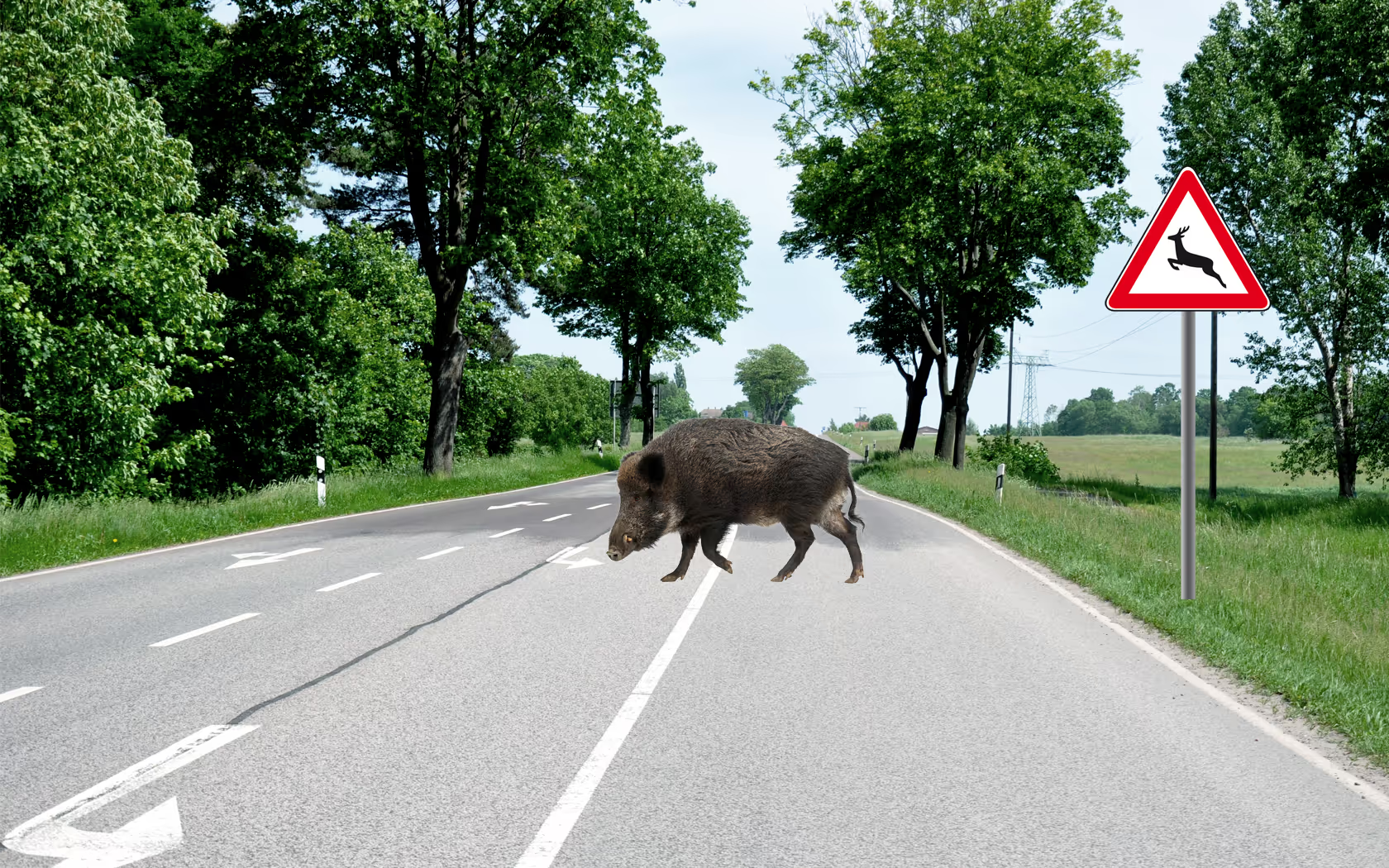
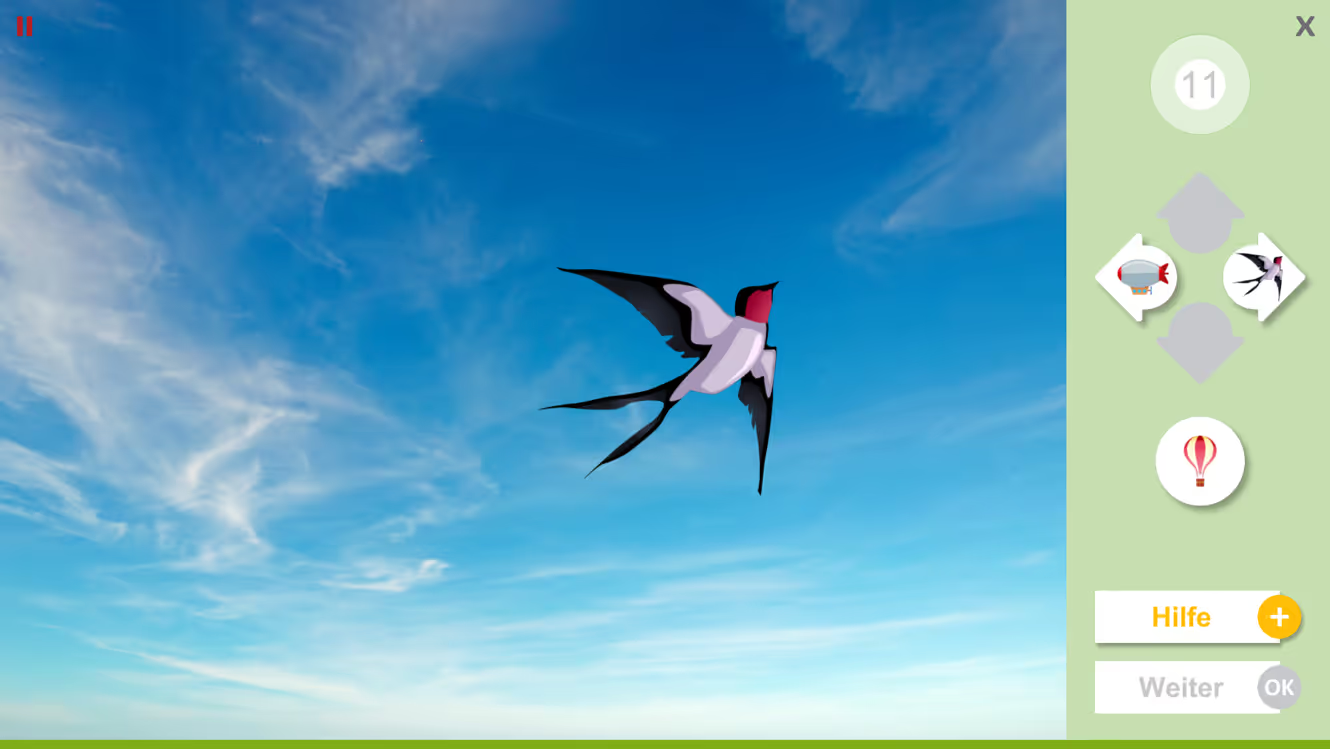
The task is to press the response button as quickly as possible as soon as a stimulus appears in the picture. According to the concept of alertness, there is only one response button. With each level, the demands on the client‘s response time increase. The program determines correct responses as well as errors (slow reactions, omissions, incorrectresponses between the stimuli).
Training material
In changing traffic conditions (real images), objects suddenly appear in the foreground. In order to „brake“, the answer button has to be pressed as quickly as possible. The complexity of the situation increases by varying the scenes, the number and size of the objects. This creates everyday demands on anticipation and intrinsic responsiveness. 16 levels are offered. An acoustic warning stimulus and the length of the response window can be individually adjusted.
Languages
German, English, French, Spanish, Portuguese, Italian, Greek, Swedish, Finnish, Danish, Dutch, Belgian Dutch, Russian, Polish, Czech, Slovenian, Hungarian, Latvian, Lithuanian, Chinese, Traditional Chinese, Korean, Turkish, Arabic, Hebrew, Farsi
Vigilance 2 (VIG2)
Indications
This training is for clients with problems in maintaining attention even when no relevant stimulus appears for a longer period of time.
Task
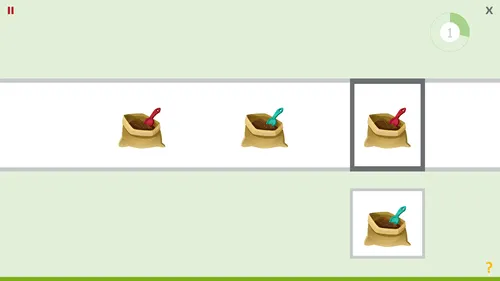
The clients work as „quality supervisors“ on a production line in a factory. They have the task of comparing the products that pass by on the belt at different intervals with the original and eliminating faulty products. At the beginning of the training, the stimulus density (sequence of objects) and the number of objects to be sorted are high, but decrease as the training progresses.
Training material
Images with specific or abstract objects are available in 9 levels. For each original object there are 3 differentiations (differences in colour, contour or object details). The difficulty level is adjusted through the similarity of the objects to be sorted out, the increase in stimulus distance (lower stimulus density) and the number of objects
to be matched. The flow direction and speed of the belt are adjustable.
Languages
German, English, French, Spanish, Portuguese, Italian, Greek, Swedish, Danish, Dutch, Belgian Dutch, Russian
Attention and Concentration (AUFM)
Indications
The module is indicated for impairments of selective attention after stroke, TBI, diffuse axial damage and many psychiatric diseases.
Task
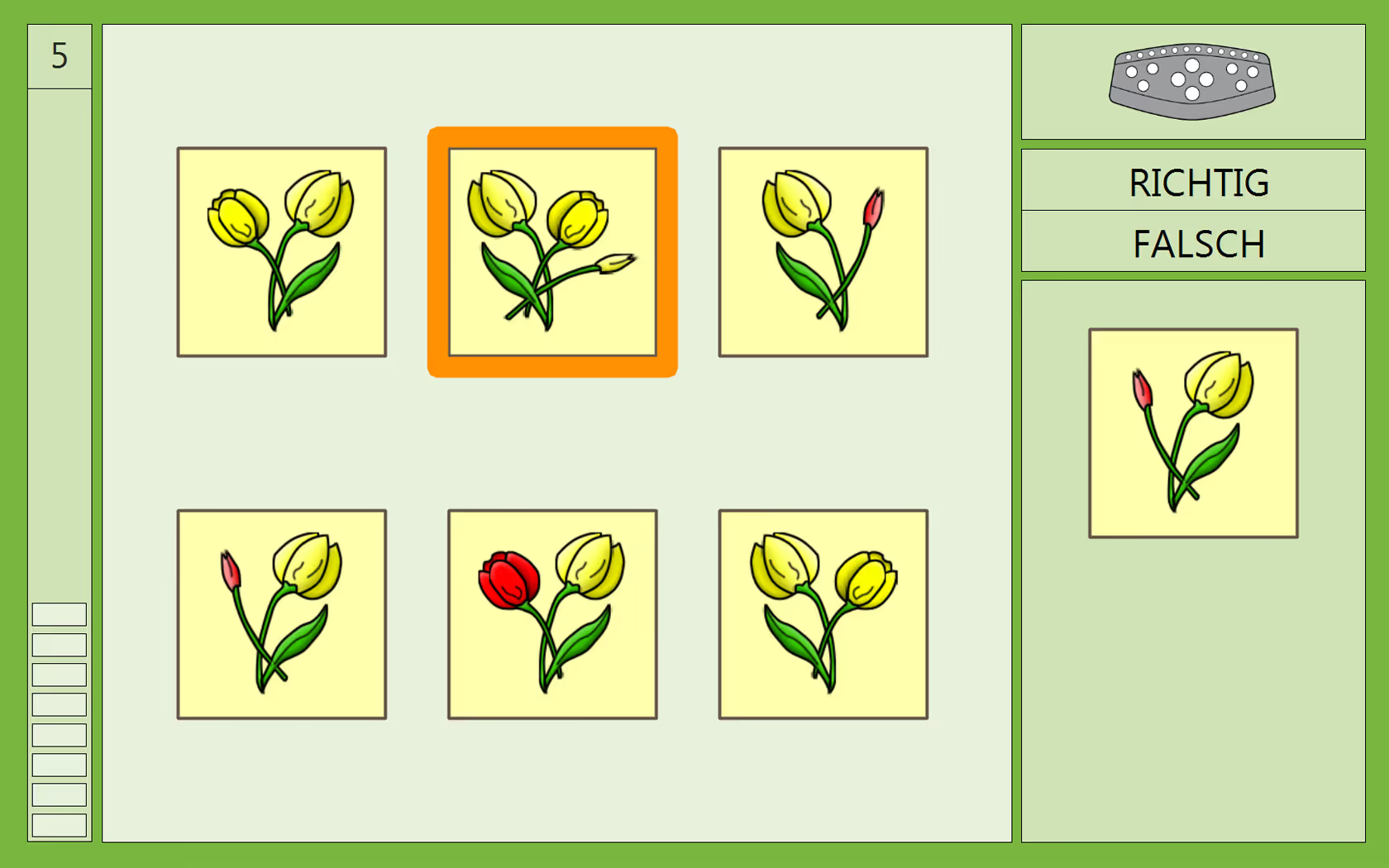
A reference image is displayed on the screen, which must be compared with other images. The task is to identify the image in the group of images that matches the reference image.
Training material
A total of 77 sets of images were created, each with 16 coloured illustrations. Specific objects (e.g., fruit, animals), (optionally selectable) geometric shapes or letters and numbers are depicted on them. The adaptive change of difficulty ensures that the client is neither over-challenged nor under-challenged. A total of 24 levels are available. As the level of difficulty increases, the objects become more and more similar. In addition, 3, then 6 and finally 9 similar objects are shown for each set of pictures in a difficulty level.
Languages
German, English, French, Spanish, Portuguese, Italian, Greek, Swedish, Danish, Dutch, Belgian Dutch, Russian
Divided Attention 2 (GEA2)
Indications
The module is designed as complex training for divided attention and is also useful for clients with attention focusing disorders or inhibition. Approx. 80 % of patients after a stroke, with TBI, and diffuse cerebro-organic impairment are affected.
Task
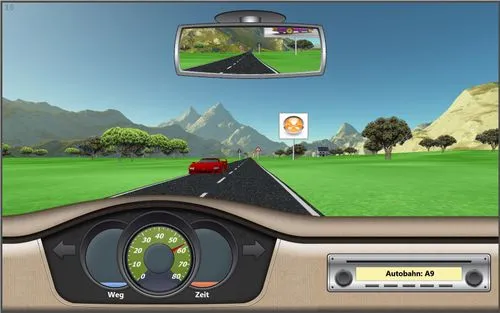
The task consists of driving a car along a certain route and reacting to parallel stimuli from up to three different visual channels (dashboard, landscape/traffic environment, rear-view mirror) and two additional auditory channels (directional information from the navigation system and car radio with traffic reports).
Training material
22 levels with different scenarios. The screen shows the view through the front window of a car. Relevant and irrelevant visual objects move towards the viewer. In parallel, relevant and later also irrelevant acoustic stimuli are presented (direction change indications, traffic messages). The number of stimuli, the stimulus density and the number of distractors are varied.
Languages
German, English, French, Spanish, Portuguese, Italian, Greek, Swedish (partially), Finnish, Danish, Dutch (partially), Belgian Dutch (partial), Russian (partial), Polish, Czech (partial), Slovenian (partial), Hungarian (partial), Latvian (partial), Lithuanian, Chinese, Traditional Chinese (partial), Korean, Turkish (partial), Arabic, Hebrew, Farsi (partially)
Spatial Operations 3D (RO3D)
Indications
The module is suitable for clients with spatial perceptive disorders and mental rotation. In addition, it can also be used for demanding selective attention training. The task also places requirements on visual working memory.
Task
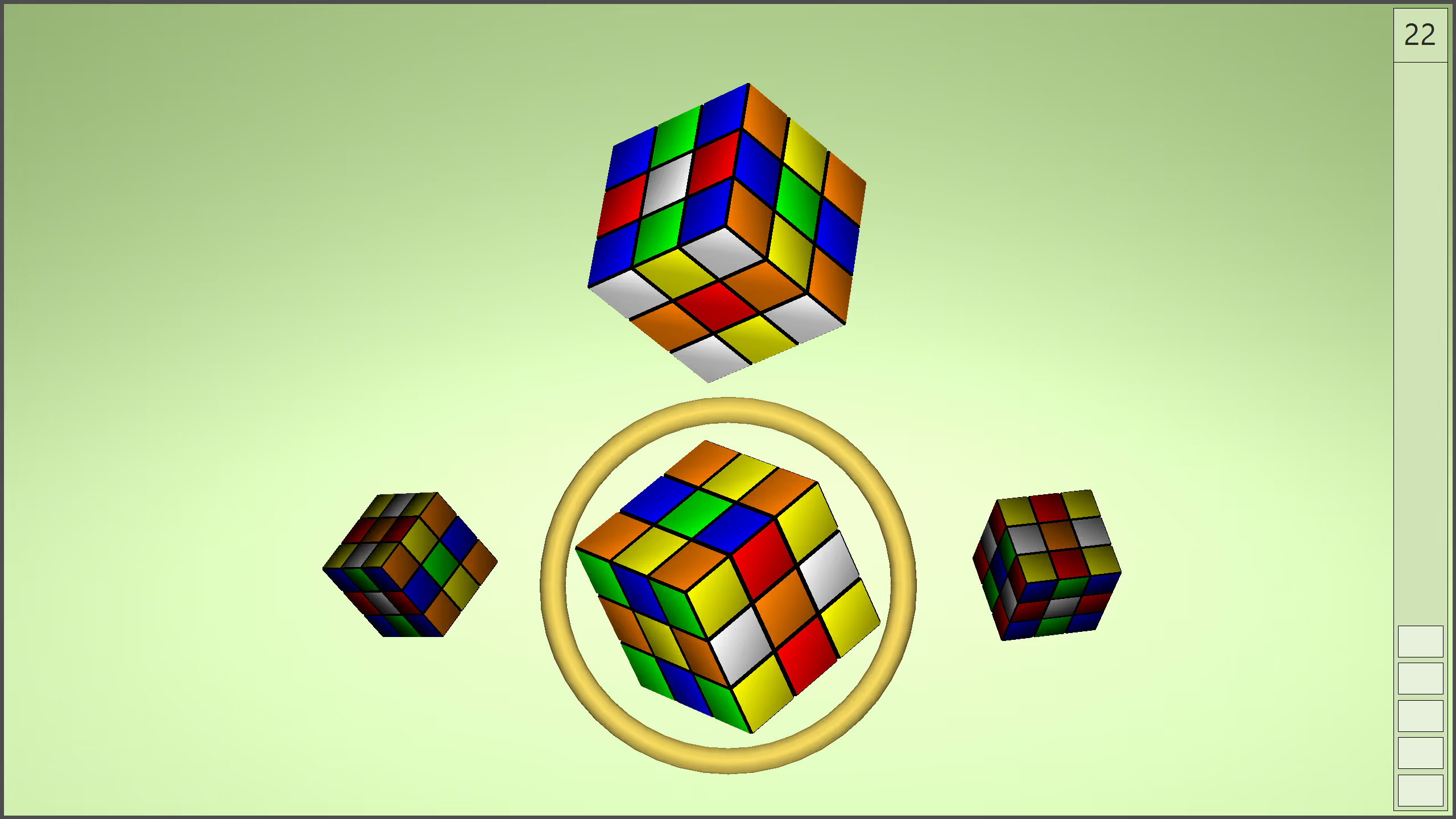
A three-dimensional object is displayed in the upper half of the screen. In the lower half of the screen there are 3 to 6 objects, which are more or less similar depending on the degree of difficulty. The clients have to find the object in the lower area, which exactly resembles the object in the upper half of the screen. All the objects on the screen can be rotated freely and therefore viewed from all sides.
Training material
A total of 432 three-dimensional objects in 67 groups are available. The module works adaptively with a total of 24 levels. The difficulty level is increased by the number (3 to 6 objects) and complexity (composite objects) of the objects to be compared.
Languages
German, English, French, Spanish, Portuguese, Italian, Greek, Swedish, Finnish, Danish, Dutch, Belgian (Dutch), Russian, Polish, Czech, Slovenian, Hungarian, Latvian, Lithuanian, Chinese, Traditional Chinese, Korean, Turkish, Arabic (partial), Hebrew, Farsi
Visuo-constructionalability (KONS)
Indications
This training is for clients with slight to medium losses of performance in the visual-constructive range. In addition to constructive skills, attention and (optional) memory skills are also required.
Task
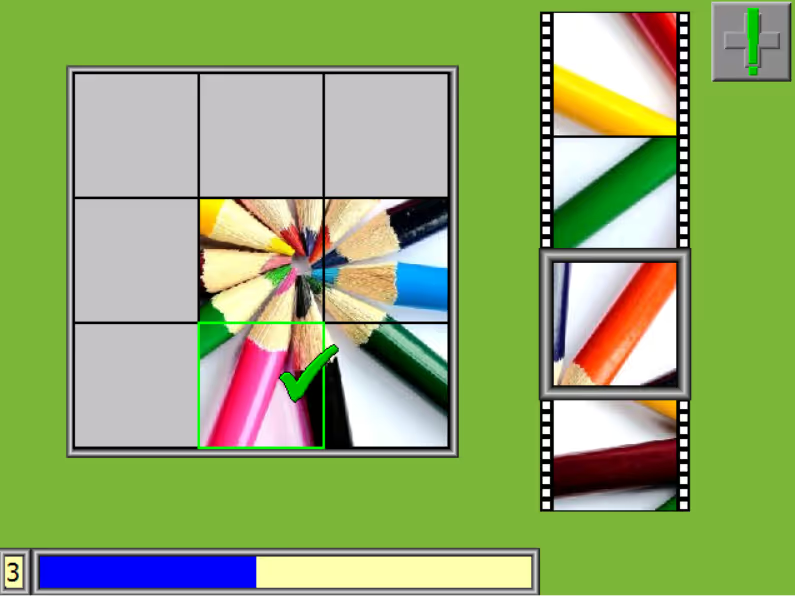
This training was designed according to the principle of puzzles. At the beginning of a task, an image is shown that the clients have to memorise. After a defined or self-determined perception phase, the image is broken down into a number of puzzle pieces and needs to be put together again.
Training material
Photos and drawings are used in 18 levels, e.g., houses, faces, everyday objects or paintings. The essential components for changing the difficulty level are the number of puzzle pieces (4–36 pieces), the complexity of the images and, at the highest level, the rotation of image parts.
Languages
German, English, French, Spanish, Portuguese, Italian, Greek, Swedish, Finnish, Danish, Dutch, Belgian Dutch, Russian, Polish, Czech, Slovenian, Hungarian, Latvian, Lithuanian, Chinese, Traditional Chinese, Korean, Turkish, Arabic, Hebrew, Farsi
Reaction behaviour (REVE)
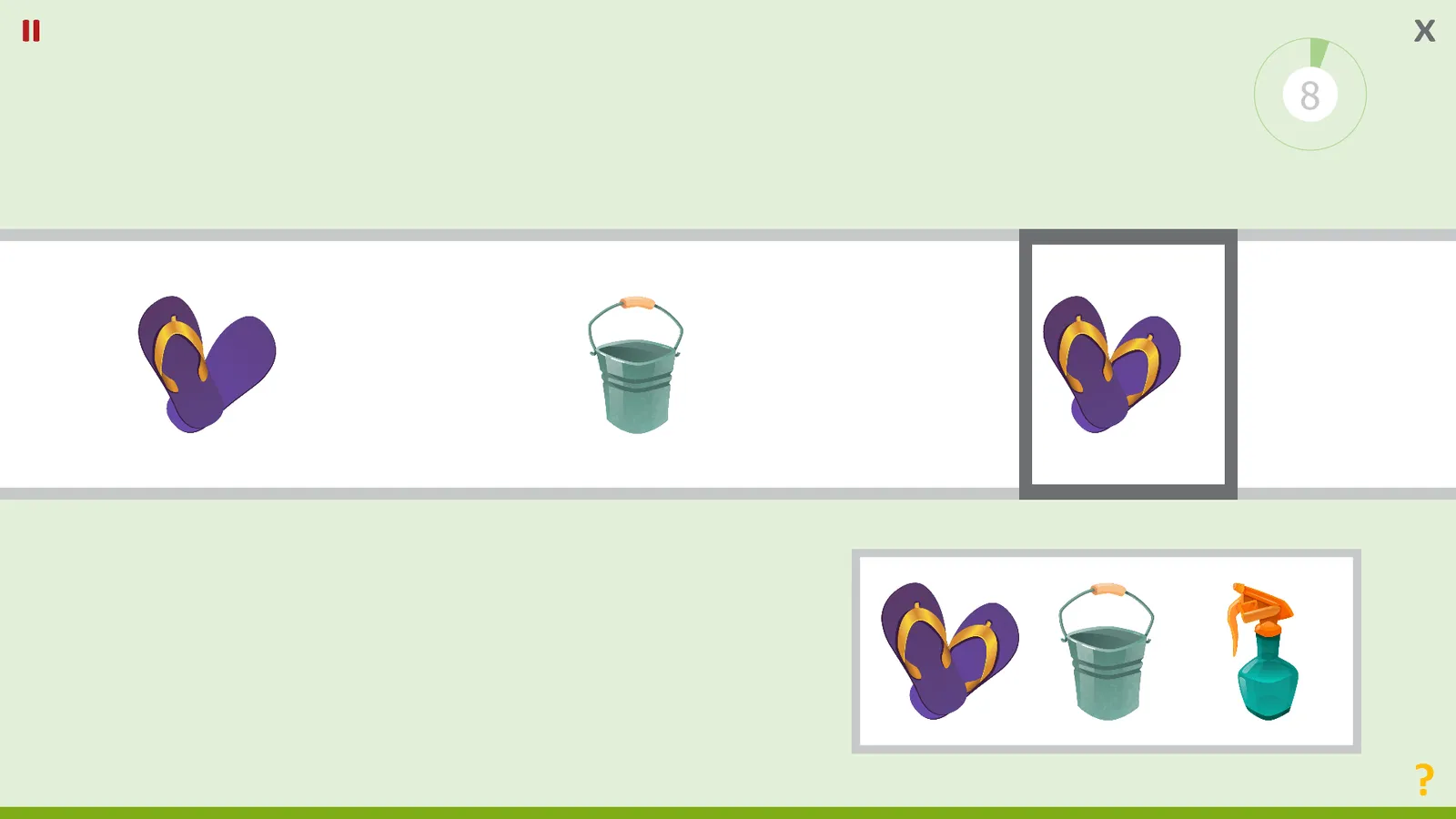
Reaction behaviour training for single and multiple choice responses to visual stimuli.
Indications
Clients with reaction speed disorders or problems with changing reactions flexibly as well as inhibition (e.g., after a stroke, craniocerebral trauma or in the context of mental illness).
Task
When a particular object is visible, the client should press a key associated with the object as quickly as possible. As the degree of difficulty increases, the number of reaction keys increases. Optionally, inhibitive behaviour (by initiating irrelevant stimuli that do not require a reaction) can also be trained.
Training material
Over 100 different visual stimuli are offered. The choice of five subject areas enables varied training. The background image can be switched off for clients with visual problems.
Languages
German, English, French, Spanish, Portuguese, Italian, Greek, Swedish, Finnish, Danish, Dutch, Belgian Dutch, Russian, Polish, Czech, Slovenian, Hungarian, Latvian, Lithuanian, Chinese, Traditional Chinese, Korean, Turkish, Arabic, Hebrew, Farsi
Responsiveness (REA1)
Indications
Disorders of selective attention with impaired ability to react to acoustic or visual stimuli (e.g. after cerebral lesions or mental illness). The aim is to improve the ability to respond quickly, correctly and flexibly to environmental stimuli.
Task
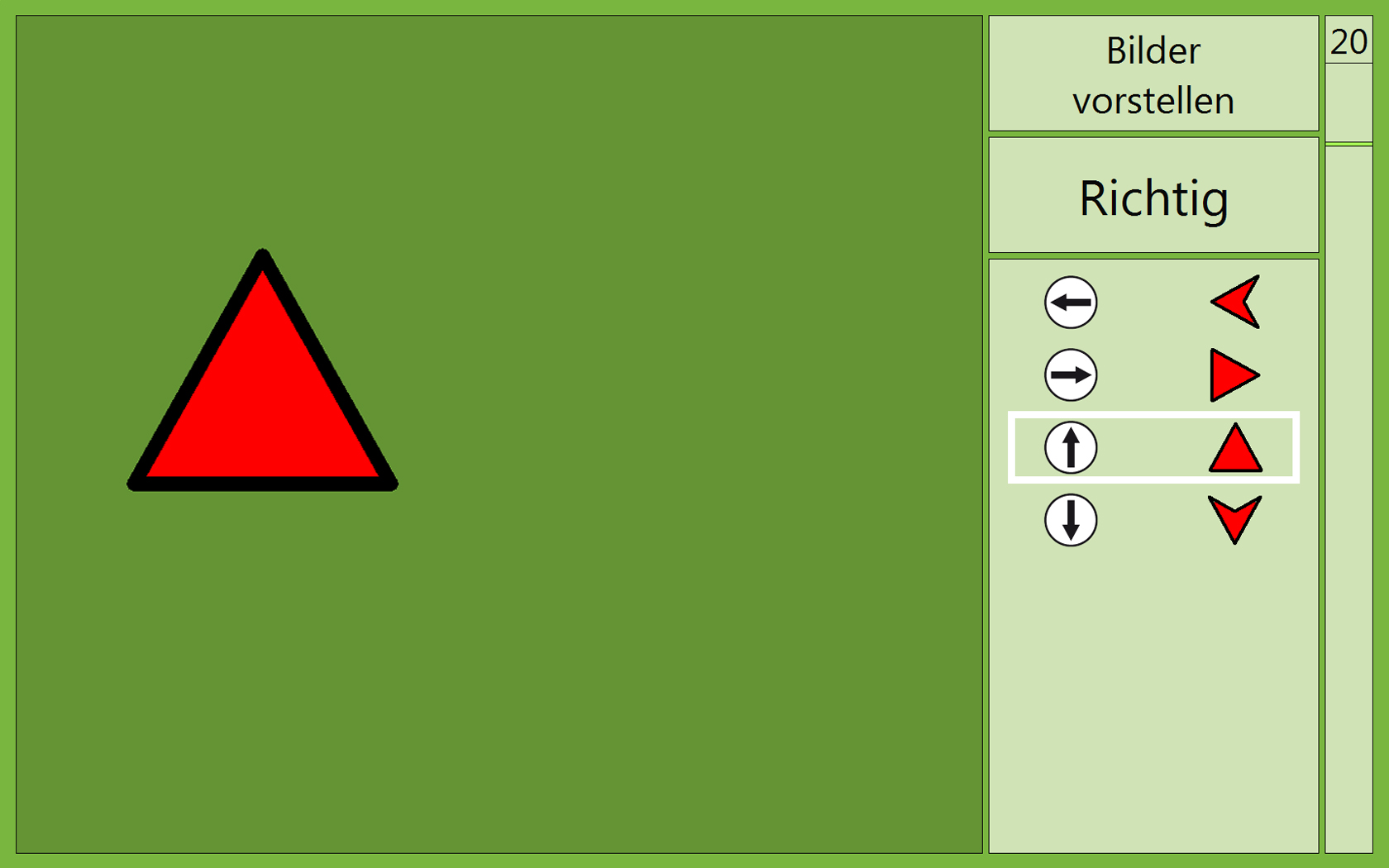
When a target stimulus (object or sound) is presented, the client should press a key associated with the stimulus as quickly as possible. Depending on the type of task, selective responsiveness (presented object and required reaction button point in the same direction) and inhibition (presented object and required reaction button point in the opposite direction) can be trained.
Training material
Contains over 200 different visual stimuli and 6 acoustic stimuli. There are three modules with 20 levels each. Only visual stimuli are offered in module 1; visual and acoustic stimuli are offered in modules 2 and 3. The difficulty varies per level by the number of reaction buttons and variations in the temporal stimulus sequence. There are 5 types of
tasks per level, which differ in the similarity of target stimulus and reaction button. An editor for creating individualised training is integrated.
Languages
German, English, French, Spanish, Portuguese, Italian, Swedish, Danish, Dutch, Belgian (Dutch), Russian, Polish, Czech, Slovenian, Hungarian, Latvian, Lithuanian, Chinese, Traditional Chinese, Korean, Turkish, Arabic, Hebrew, Farsi
Sustained Attention (SUSA)
Indications
This training is for clients with problems maintaining attention and focusing for a longer period of time. Sustained attention disorders occur frequently after strokes or craniocerebral traumata.
Task
The clients work as „quality supervisors“ on a production line in a factory. They have the task of comparing the products that pass by on the belt at different intervals with the original and eliminating faulty products. In contrast to Vigilance 2 training, the stimulus density (object sequence) and the proportion of objects to be sorted is increased during the course of the training.
Training material
Images with specific or abstract objects are available in 9 levels. For each original object there are 3 variations (differentiations in colour, contour or object details). The difficulty is adjusted by the number and similarity of the object, the speed of presentation and the number of missing objects. The belt‘s direction of flow and speed can be adjusted.
Languages
German, English, French, Spanish, Portuguese, Italian, Greek, Swedish, Danish, Dutch, Belgian (Dutch), Russian, Polish, Czech, Slovenian, Hungarian, Latvian, Lithuanian, Chinese, Traditional Chinese, Korean, Turkish, Arabic, Hebrew, Farsi
Divided Attention (GEAU)
Indications
This training is for clients whose divided attention is impaired: after a stroke, with TBI, diffuse cerebro-organic impairments and psychiatric disorders.
Task
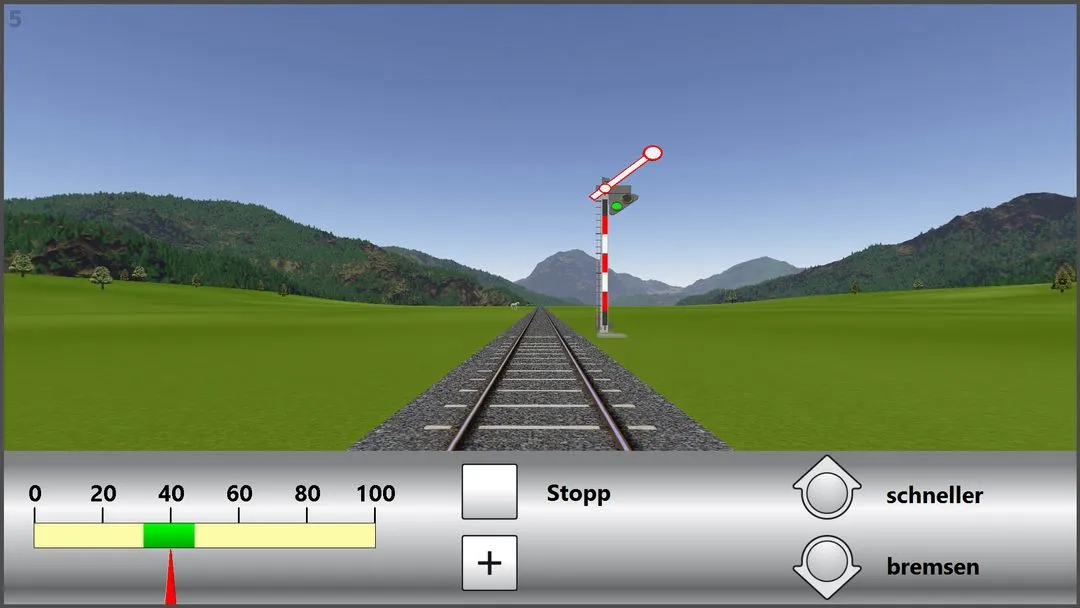
The lower part of the screen shows a driver‘s cab. Above this, the route can be observed (as through the windscreen of a locomotive). The clients have to simultaneously react to information in the driver‘s cab and to signals and objects on and along the route.
Training material
This training consists of 14 levels. Initially, the clients only have to regulate the train‘s speed, the specification of which changes at random. Step by step, further tasks are added. This includes reactions to various track signals, to the „dead-man lamp“, to emergency signals and other objects. The difficulty is adapted by the increasing number, density and parallelism of stimuli and the reduction of the maximum allowed reaction time.
Languages
German, English, French, Spanish, Portuguese, Italian, Greek, Swedish, Finnish, Danish, Dutch, Belgian Dutch, Russian, Polish, Czech, Slovenian, Hungarian, Latvian, Lithuanian, Chinese, Traditional Chinese, Korean, Turkish, Arabic, Hebrew, Farsi
Spatial Operations 2 (SPOT)
Indications
All spatial-perceptive disorders, especially in clients with parietal lesions and/or neglect.
Task
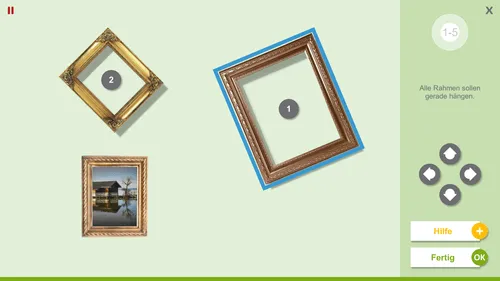
This module consists of nine different tasks, which differ significantly from one another depending on the spatial-perceptual partial performance. Mostly, training is done by comparing and matching a spatial property to a reference object. The following sub-skills can be trained: Position estimation, angle estimation, level estimation, size estimation in one and two dimensions, parallelism estimation, length estimation, dividing lines and speed/distance estimation.
Training material
Several photorealistic images close to everyday life are available for each partial performance. The short-term memory for spatial perceptions is trained at higher levels by hiding the reference object. Reconstruction must then be carried out from memory.
Languages
German, English, Spanish
Two-dimensional Operations (VRO1)
Indications
Loss of performance with regard to visual-perceptive requirements such as exploring spatial positions and spatial orientation. This training can also be used as demanding training for selective attention.
Task
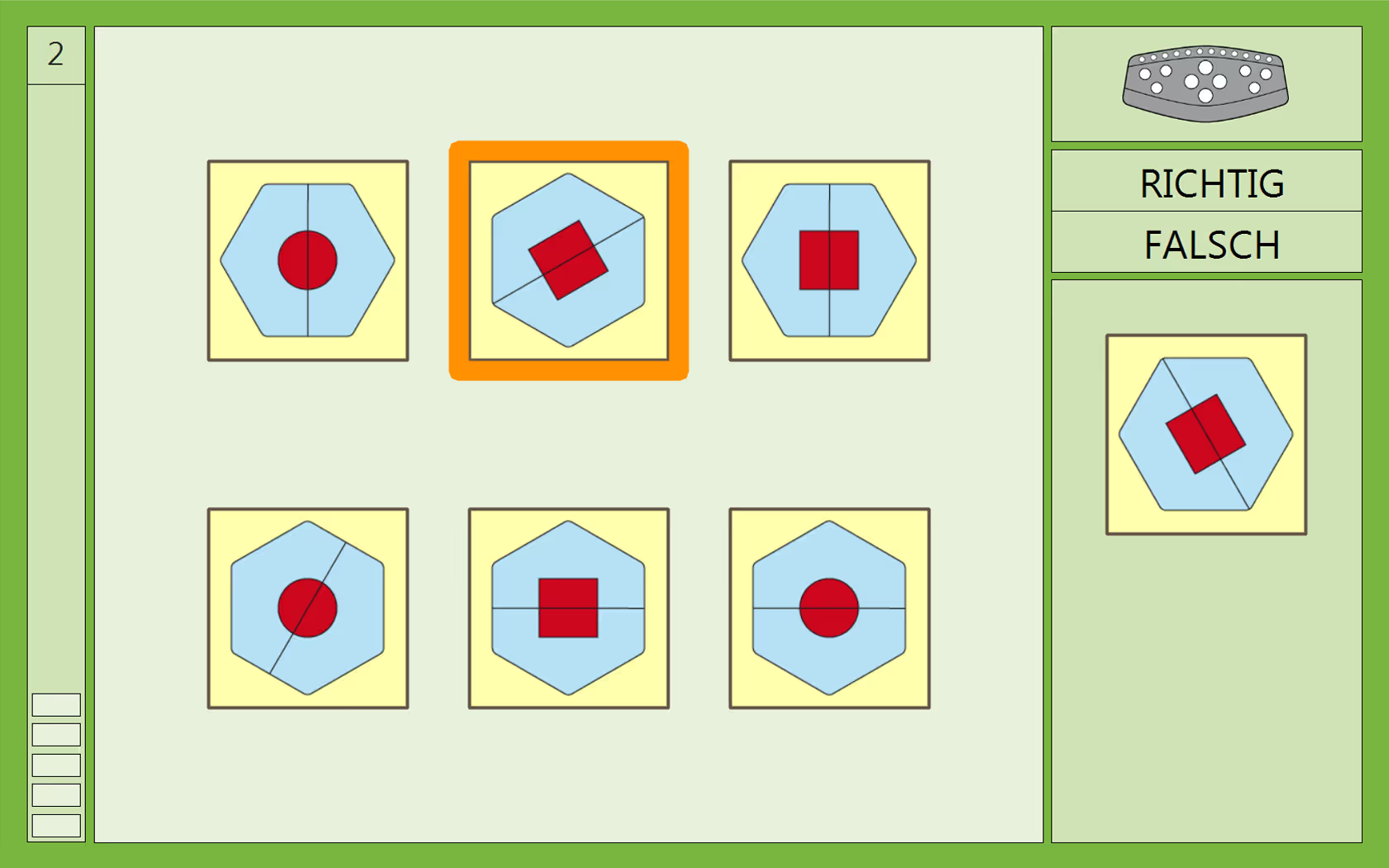
Several objects to be compared with an object in the information area are displayed on the screen. The aim is to find an object from the set of objects, which corresponds to the „sample object“, but rotated by 90°, 180° or 270°.
Training material
Geometric figures such as triangles, squares, hexagons are used as objects. In 24 levels, you work on 8 levels of difficulty, each with 80 to 160 objects. The difficulty is adapted via the number and type of objects and increasing similarity of the objects presented (simple geometric figures to complex objects) and the strength of the rotation.
Languages
Deutsch, Englisch, Spanisch